
This is part two of my notes from the clinic I attended with Christoph Hess, head of the training dept at the German equestrian federation, and international dressage judge.
You can find the first post here.
Please again note that these are just my personal notes from the seminar, and take it only as that.
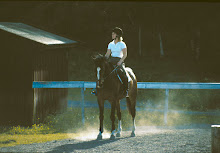
Pictures are not of a good quality I am afraid, I had only my cell phone...
#5. Intermediate, talented horse, worked in hyperflexion by rider.
Now, I guess that you know what I mean about hyperflexion, and consequently what I felt when watching this rider warm up her very tense horse, rider consistently napping on the inner rein.
Not good.
I was wondering what Mr Hess would do here.
He started out to ask her to let out the reins to work the horse in a longer and deeper frame, to “make the horse happy and relaxed”, and told her that the horse “needed confidence”.
They started to work with loosing up the horse in shoulder fore, with soft rein. The rider got constantly reminded to give rein and “überstreichen” (move both hands forwards towards the bit for a couple of strides). He kept asking for the rider to give on the inner rein, and instead start to work with outer aids.
The work got better, and the rider improved, but when they finished I still wished that he had taken a more thorough approach to address the rider’s way of working her horse.
BUT.
Day 2, people.
This rider turned up with such a completely different approach in her riding, that I am convinced that Mr Hess had taken a private tête-a-tête with her the evening before.
I assume he did not want to approach her like that in front of the audience the previous day.
Day two we saw a profound difference, already from the beginning.
The rider started to warm up the horse low and long. When they started the work, it continued in the same way. Supplying work in a long and low frame, to get the horse to relax. Much work with shoulder in and transitions.
I was very happy with what I saw, and I believe the horse was happy too.
#6 Iberian (PRE) stallion, PSG-level?
When the horse started to work, Mr Hess said it was not in front of the aids, it was short in the neck and behind the vertical, and did not react enough on the leg aids. The rider was told to be soft on the hands, and to keep them still.
She was then told to work the horse in posted trot on the track and to give both reins and just ride forward.
Mr Hess wanted a relaxed horse in front of the leg.
She was told not to sit down to the trot until the horse was supple enough in the back. He wanted her to keep the long reins until the horse opened in the back and was actively seeking the bit.
Now, I guess that you know what I mean about hyperflexion, and consequently what I felt when watching this rider warm up her very tense horse, rider consistently napping on the inner rein.
Not good.
I was wondering what Mr Hess would do here.
He started out to ask her to let out the reins to work the horse in a longer and deeper frame, to “make the horse happy and relaxed”, and told her that the horse “needed confidence”.
They started to work with loosing up the horse in shoulder fore, with soft rein. The rider got constantly reminded to give rein and “überstreichen” (move both hands forwards towards the bit for a couple of strides). He kept asking for the rider to give on the inner rein, and instead start to work with outer aids.
The work got better, and the rider improved, but when they finished I still wished that he had taken a more thorough approach to address the rider’s way of working her horse.
BUT.
Day 2, people.
This rider turned up with such a completely different approach in her riding, that I am convinced that Mr Hess had taken a private tête-a-tête with her the evening before.
I assume he did not want to approach her like that in front of the audience the previous day.
Day two we saw a profound difference, already from the beginning.
The rider started to warm up the horse low and long. When they started the work, it continued in the same way. Supplying work in a long and low frame, to get the horse to relax. Much work with shoulder in and transitions.
I was very happy with what I saw, and I believe the horse was happy too.
When the horse started to work, Mr Hess said it was not in front of the aids, it was short in the neck and behind the vertical, and did not react enough on the leg aids. The rider was told to be soft on the hands, and to keep them still.
She was then told to work the horse in posted trot on the track and to give both reins and just ride forward.
Mr Hess wanted a relaxed horse in front of the leg.
She was told not to sit down to the trot until the horse was supple enough in the back. He wanted her to keep the long reins until the horse opened in the back and was actively seeking the bit.
She was to take him into a 20 m circle, still with loose reins. The horse was to stay on the circle and not to enlarge it. Mr Hess commented that the horse was either running or was behind the leg.
From the work on circle, he directed them out to the 2nd track to do some extended trot, still posting. The rider was told not to ask for too much extension which would result in the horse opening too much in the hind legs and loosing the balance.
Mr Hess commented that PRE/Lusitanos often were a bit stiff over the back, and needed
From the work on circle, he directed them out to the 2nd track to do some extended trot, still posting. The rider was told not to ask for too much extension which would result in the horse opening too much in the hind legs and loosing the balance.
Mr Hess commented that PRE/Lusitanos often were a bit stiff over the back, and needed
supplying work where they stretch forward/downward to loosen up.
The rider was asked to shorten the stirrups.
After this they went back to the circle where they worked with leg yield to get the horse to loosen up a bit more in the back.
Then back to the track and work with shoulder in at trot and canter, still on longer reins and in forward tempo. Back on the circle, reducing the circle only by using seat and legs. The horse was to stretch and keep the balance and rhythm. Medium canter, increase the circle again, followed by a reduction of diameter again and collection, only by seat and legs. After a few rounds, a transition to posting trot, long reins.
The horse was now relaxed and in front of rider.
The rider was asked to shorten the stirrups.
After this they went back to the circle where they worked with leg yield to get the horse to loosen up a bit more in the back.
Then back to the track and work with shoulder in at trot and canter, still on longer reins and in forward tempo. Back on the circle, reducing the circle only by using seat and legs. The horse was to stretch and keep the balance and rhythm. Medium canter, increase the circle again, followed by a reduction of diameter again and collection, only by seat and legs. After a few rounds, a transition to posting trot, long reins.
The horse was now relaxed and in front of rider.

#7 DWB, GP debut that weekend.
When this horse entered the arena I am afraid I thought it a bit pluggy and uninteresting being a GP horse. More of a schoolmaster type of horse, doing the exercises but lacking the flair.
They started out with transitions walk-trot-walk to get more impression in the trot, and improve the hind leg activity. Mr Hess told the rider (as he did to several others) to shorten the stirrups two holes.
As they moved on to more collected movements we got quite another impression of the horse.
It had a marked talent for the more difficult movements, and a very good passage-piaff, all which made Mr Hess so enthusiastic as to exclaim “London 2012” several times, lol!
The horse was a spitting image to one of my friend’s horses, which instantly made me call and tell her that she now had no excuses not to make it to GP (evil laughter)
The horse was running off a bit to start with, so Mr Hess asked them to work with shoulder in and to try and slow down. They then started to work with serpentines, again to try and reduce tempo and concentrating to keep the balance. He asked the rider to make the serpentines shaped like S-es, to watch the outer side with outer leg and to sit down in the saddle in the middle of the S, otherwise posting trot.
Followed by canter on a circle; medium canter on the open part, collection on the other half, keep inside rein soft.
Mr Hess stressed the importance of working also younger horse at shoulder in so they get straight. Sometimes you have to accept a shorter neck to help a youngster to keep the balance, as long as the horse is taking contact on the bit and is round over the back.
On the transitions from trot to walk he on the other hand, he commented to the rider that she had to watch that the horse did not shorten the neck.
After being initially a bit unbalanced (like a gangly teenager) the horse got more balanced and between the aids as the work proceeded, and also concentrating more on the rider.

The horse was running off a bit to start with, so Mr Hess asked them to work with shoulder in and to try and slow down. They then started to work with serpentines, again to try and reduce tempo and concentrating to keep the balance. He asked the rider to make the serpentines shaped like S-es, to watch the outer side with outer leg and to sit down in the saddle in the middle of the S, otherwise posting trot.
Followed by canter on a circle; medium canter on the open part, collection on the other half, keep inside rein soft.
Mr Hess stressed the importance of working also younger horse at shoulder in so they get straight. Sometimes you have to accept a shorter neck to help a youngster to keep the balance, as long as the horse is taking contact on the bit and is round over the back.
On the transitions from trot to walk he on the other hand, he commented to the rider that she had to watch that the horse did not shorten the neck.
After being initially a bit unbalanced (like a gangly teenager) the horse got more balanced and between the aids as the work proceeded, and also concentrating more on the rider.
My notes is mainly from day one where the work was to concentrate on the German educational scale, and was interesting as much was of a general approach, concentrating on the basic, but so very important work. Having a relaxed horse that is in front of the aids.
Day two was more preparations for the show to follow in the weekend, also interesting but aiming more on how to show each horse at its best.
All in all it was two very interesting days.


 #2. Was a GP horse, making the debut this year.
 #3. Junior/advanced level horse, 17 yo.





 Posts
Posts


