
Today we have -26C (-15F), and the temperature is falling.
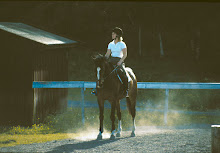
I have been riding tonight, and it was a bit difficult to keep the fingers warm, lol!
Low temperatures is a topic which often raises some questions with horse owners, so here are some facts and tips.
When does the horse get cold?
Studies are made by the Swedish Agricultural University (SLU) on how horses handle the cold.
Studies are made by the Swedish Agricultural University (SLU) on how horses handle the cold.
Food is the most important factor.
When hay is digested, the process also generates heat.
The more the horse eats, the lower temperature he handles without getting cold.
The more the horse eats, the lower temperature he handles without getting cold.
Horses can handle low temperature much better than humans.
They have seven times more body mass than us, but only 2.5 times more skin.
Extra fat is more important than the coat. The fat isolates three times more than other types of tissue. So make sure your horse is not underweight when the winter comes!
They have seven times more body mass than us, but only 2.5 times more skin.
Extra fat is more important than the coat. The fat isolates three times more than other types of tissue. So make sure your horse is not underweight when the winter comes!
All clipped horses need a blanket.
An unclipped horse in medium work (up to intermediate level) normally does not need a blanket during winter time if the temperature is over -10C(14F).
If the temperature is around -10 or below, you might either add extra hay (1-3 kg depending on temperature) or add a blanket.
An unclipped horse in medium work (up to intermediate level) normally does not need a blanket during winter time if the temperature is over -10C(14F).
If the temperature is around -10 or below, you might either add extra hay (1-3 kg depending on temperature) or add a blanket.
If it is raining, snowing or hard wind, a blanket is better.
Wind, rain, sleet and snow are harder to handle for the horses than the cold is.
If the wind is 10 m/s you would need to increase with an extra 15 kg of hay to compensate!
On the other hand you might remove the blanket on a sunny but cold and still winter day.
When it is cold, the horse raises the hair to get extra insulation.
If he is very cold, he shivers.
You can be quite certain that your horse is not cold as long as the hairs in the coat lie flat against the body.
If he is very cold, he shivers.
You can be quite certain that your horse is not cold as long as the hairs in the coat lie flat against the body.
Sources:
Jonna Lindås, Ingrid Olsson, 2004: När behöver hästen täcke? Fördjupningsarbete nr 259. Enheten för hippologisk högskoleutbildning, SLU, Uppsala
Johanna Perman, 2000: Behöver hästen täcke på vintern? Fördjupningsarbete nr 111. Enheten för hippologisk högskoleutbildning, SLU, Uppsala
Jonna Lindås, Ingrid Olsson, 2004: När behöver hästen täcke? Fördjupningsarbete nr 259. Enheten för hippologisk högskoleutbildning, SLU, Uppsala
Johanna Perman, 2000: Behöver hästen täcke på vintern? Fördjupningsarbete nr 111. Enheten för hippologisk högskoleutbildning, SLU, Uppsala
Can I work my horse in cold weather?

Yes, you can.
Horses have a long way from the nostrils to the lungs, and again, their respiration system works much better in low temperatures than the human eqiuvalent does. The air is warm before it reaches the lungs, so you can work your horse as normal even if it is cold outside.
The racing season for harnessed horses goes on all through the winter in Scandinavia.
Horses competing here work at top speed, with maximum air intake.
Horses competing here work at top speed, with maximum air intake.
A study has been made by the Swedish University of Agricultural Sciences:
Five standardbred horses were subjected to a treadmill exercise in a climate chamber, first in +17C (63F) and then in -25C (-13F).
Conclusion was that the cold exposure (-25C) did not seem to have any untoward effects on near maximal exercise tolerance.
On the contrary the cold environment seemed to be beneficial for heat dissipation during exercise. Further, no evidence of tissue damage in the respiratory tract was observed.
The horses showed no sign of discomfort during exercise in the cold.
(Source: Dahl, Gillespie, Kallings, Persson, Thornton: Effects of a Cold Environment on Exercise Tolerance in the Horse. Swedish University of Agricultural Sciences, Faculty of Veterinary Medicine.)
Article can be found here.
Conclusion was that the cold exposure (-25C) did not seem to have any untoward effects on near maximal exercise tolerance.
On the contrary the cold environment seemed to be beneficial for heat dissipation during exercise. Further, no evidence of tissue damage in the respiratory tract was observed.
The horses showed no sign of discomfort during exercise in the cold.
(Source: Dahl, Gillespie, Kallings, Persson, Thornton: Effects of a Cold Environment on Exercise Tolerance in the Horse. Swedish University of Agricultural Sciences, Faculty of Veterinary Medicine.)
Article can be found here.
Riding in new, deep snow is fun, but it is strenuous work for the horse, and can be tough on the tendons.
(Walk in deep snow yourself. Hard work compared to normal walking, right?)
So have fun, but keep it short!
(Walk in deep snow yourself. Hard work compared to normal walking, right?)
So have fun, but keep it short!
How do I equip my horse?
When we are closing in on the winter season here in November, we shoe our horses with fixed studs and rubber inlays, Huf-grip®.
If you do, you won’t have any trouble with footing, come what may. We work them all through the winter on the snow, which is a super surface to work on. Jump them too.
Before and after work, cover your horse with an exercise rug. Take it off during work, your horse won’t need it.
If you do, you won’t have any trouble with footing, come what may. We work them all through the winter on the snow, which is a super surface to work on. Jump them too.
Before and after work, cover your horse with an exercise rug. Take it off during work, your horse won’t need it.
If it is very cold, I personally prefer not to ride with a metal bit as I imagine it is uncomfortable to the horse. I use one in plastic, or ride bitless.
If you do ride with a metal bit, remember to warm it up before putting it into the horse's mouth.
If you do ride with a metal bit, remember to warm it up before putting it into the horse's mouth.
Never, ever put a sweat horse out in the cold. He must dry up first. Cover him up and/or walk him dry.
Also remember that the horses might not want to drink enough water if the water is cold. Keep an eye on water consumption, and offer luke warm water in addition after training.
If you reduce your riding during the cold spells, reduce the hard feed but keep up/increase amount of forage to keep the horse warm.
How do I equip myself?
Riding in very cold weather can be…cold!
Use layers of clothes, and always wear wool as the first layer closest to your body. Best there is.
On top of my riding breeches, I use chaps. They are better to ride in than thermo trousers (which can be bulky), and they keep you reasonably dry also in snow, sleet and rain. Give you a good grip in the saddle too!
Invest in a good winter jacket. Mountain Horse has a good range and quality. I prefer something with down because it keeps you warm without being too heavy.
Use a bum warmer on the saddle. Either synthetic, or in sheep skin or reindeer skin (which is the best!)
Metal stirrups make your feet cold. Exchange them for wood, or use some type of isolation/cover.
Your feet and hands are most problematic.
Feet: I swear to Muck boots. Buy them large enough to get a thick pair of wool socks inside, and you’ll stay dry and warm. The riding model is also high enough to walk through the snow without getting it down into your boots. Earlier in the season you can handle the mud without problems when fetching the horses – yay!
Winter boots can be bulky. Check that the stirrups are wide enough to accomodate them so you won't get stuck if something happens.
Feet: I swear to Muck boots. Buy them large enough to get a thick pair of wool socks inside, and you’ll stay dry and warm. The riding model is also high enough to walk through the snow without getting it down into your boots. Earlier in the season you can handle the mud without problems when fetching the horses – yay!
Winter boots can be bulky. Check that the stirrups are wide enough to accomodate them so you won't get stuck if something happens.
Hands. Not easy. Thick gloves are problematic to work with. Again, Mountain Horse is my choice.
Keep your training short, but in up tempo. That is the easiest way to stay warm. If you are cold, jump off your horse and walk/run beside him, that will get your temperature up.
Ride bareback! Now is the time to train on seat and balance. It will keep you warm too!
Protect your face. Use a cold protecting cream, and cover up if it is really cold.

AK is desperately trying to get her feet thawed in warm water after a -26C riding experience.
Hjalmar is pretending she is a horse, and she gets a snack for good behaviour (while the rest of us are just cracking up with laughter!)
Hjalmar is pretending she is a horse, and she gets a snack for good behaviour (while the rest of us are just cracking up with laughter!)





 Posts
Posts


