
It's just that the new job has been occupying my mind and time lately, and with the addition of horses and family there has not been much time for blogging.
I am afraid there will be a bit more infrequent blogging here for a time.
I am fortunate enough to be able to attend seminars from time to time, and they always are a great source of inspiration.
I am also fortunate enough to have access to good trainers.
I say "fortunate", and value it because I grew up in a small town without these possibilities.
I know that in many places around the world the distances makes it impossible to have the support of, and the inspiration of, skilled trainers and riders.

BUT -
We do have the internet.
Lots of information is available for free.
Use it!
I have lately joined a site called horsehero.com.
They have a lot of videos on training (all disciplines), stable management, showing, grooming, health, interviews - you name it.
You can try it out for free, then you have to subscribe for a reasonable sum - £15/year.
I like it. Another source is youtube.
I found a nice video from Jane Savoie on youtube about the always important subject of straightening the horse. She here introduces a term which was new to me: "first position", which I understand is an even softer position of a shoulder fore.
I like her comment about the difference of resisting and evasion in a horse.
In the video we see an example of a well schooled horse evading, but not resisting.
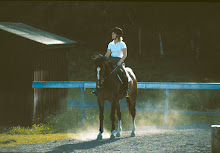
I just have to smile when seeing this, because I experience much of the same problem with my horse Fame.
She also wants to drift to the right when I ask her for the left canter depart.
There is a saying in dressage that "the hind legs are attached to the reins".
Conclusion?
We have to watch the contact on the reins. If the hind legs are not working properly, you will feel it in the contact.
(Read more about the crooked horse in an earlier post here)
So why is the straightening work important?
When the horse is to collect, he has to engage more with the hind legs, i.e. carry more weight by closing the angles in the joints and stepping under more.
If one hind leg is not strong enough to carry, true collection will be impossible.
So it is just to hang in there.
Patient work over time.
This weekend I am fortunate again -
Jimmi is here, and Fame and me we have to work haaaard.
On Saturday I will do my best to compensate for the fat I've burnt -then it's time for dinner with some horsey friends again.
Yippeee!
Have a nice week-end everyone!

And.....
No kittens! The Sofa princess was in heat again last week.
Tricked us all.





 Posts


